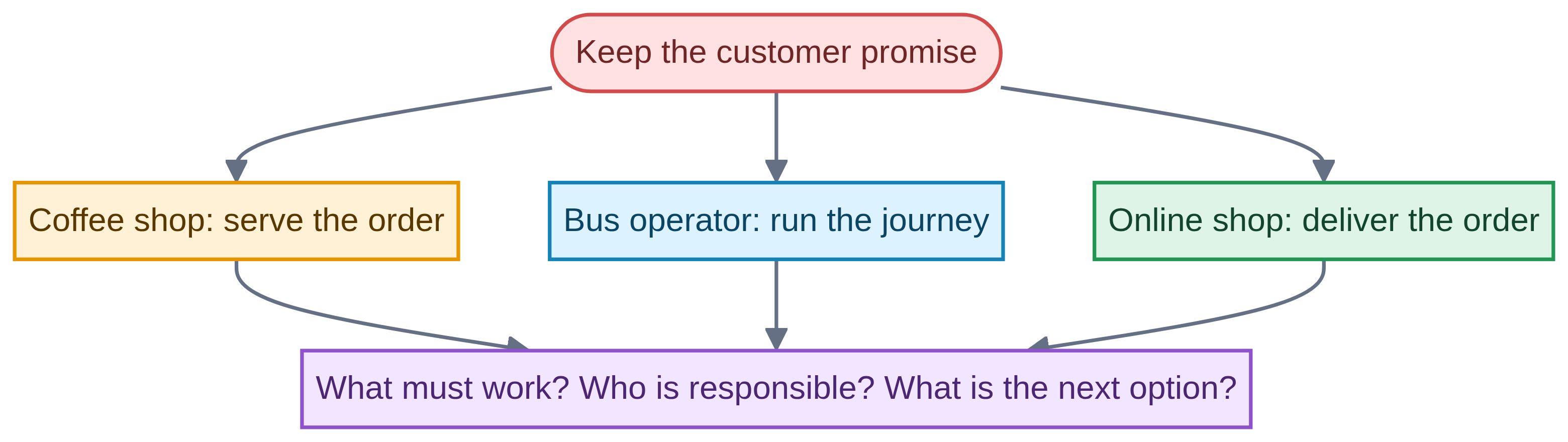
A café serves coffee. A bus operator gets passengers to their destination. An online shop gets an order to a customer.
Each promise relies on several people and everyday arrangements. If one part is missing or stops working, the owner needs to know what else may be affected, who can check, and what to do next.
This is not about technical language or a big project. A simple map can show what the business promises, what it relies on, who is responsible, and what still needs checking.
Three familiar examples
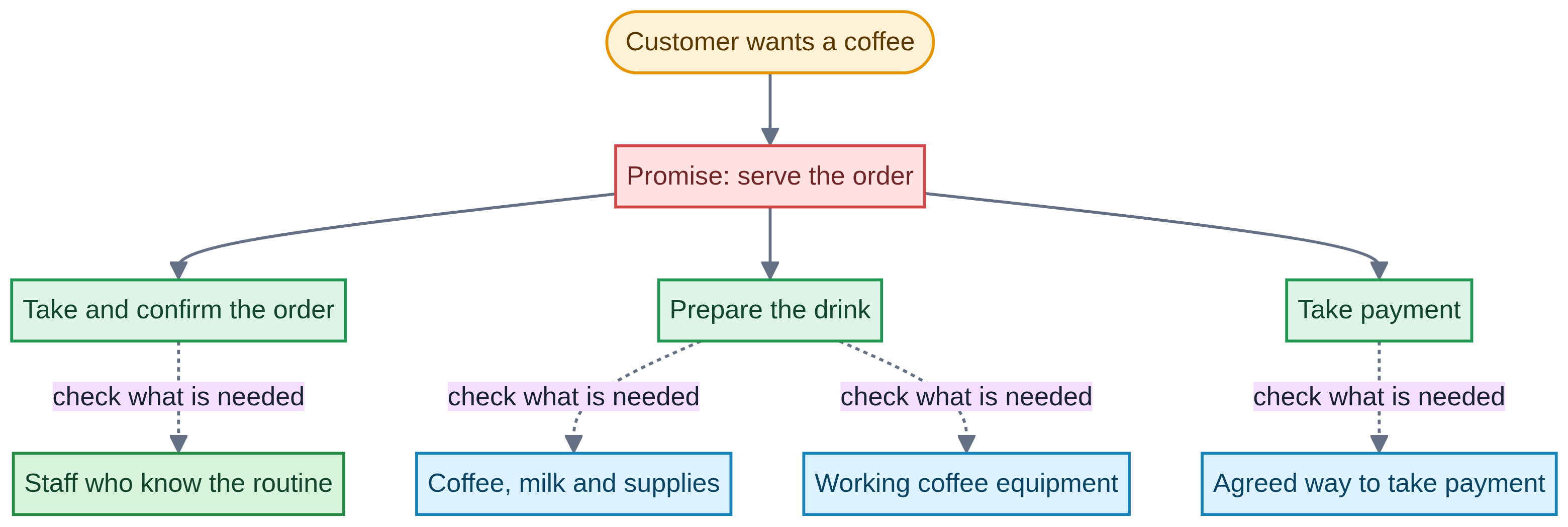
1. A coffee shop: serve the order
A customer’s coffee may rely on staff, ingredients, working equipment, power and an agreed way to take payment. If an ingredient delivery is late or the machine stops, the owner can see which part of the customer promise needs attention and who should follow up.
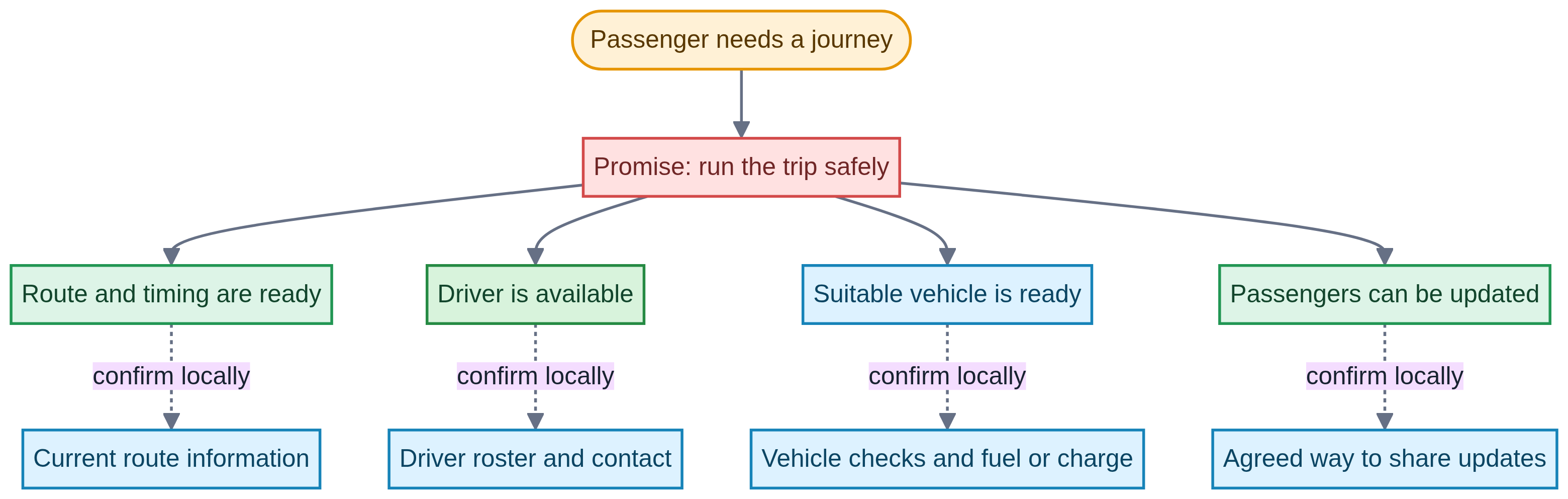
2. A bus operator: run the journey
A scheduled trip may rely on an available driver, a suitable vehicle, fuel or charge, a workable route and a way to update passengers. The operator must confirm what applies to its own service and follow its safety procedures. The point is to make responsibilities and unanswered questions visible before disruption occurs.
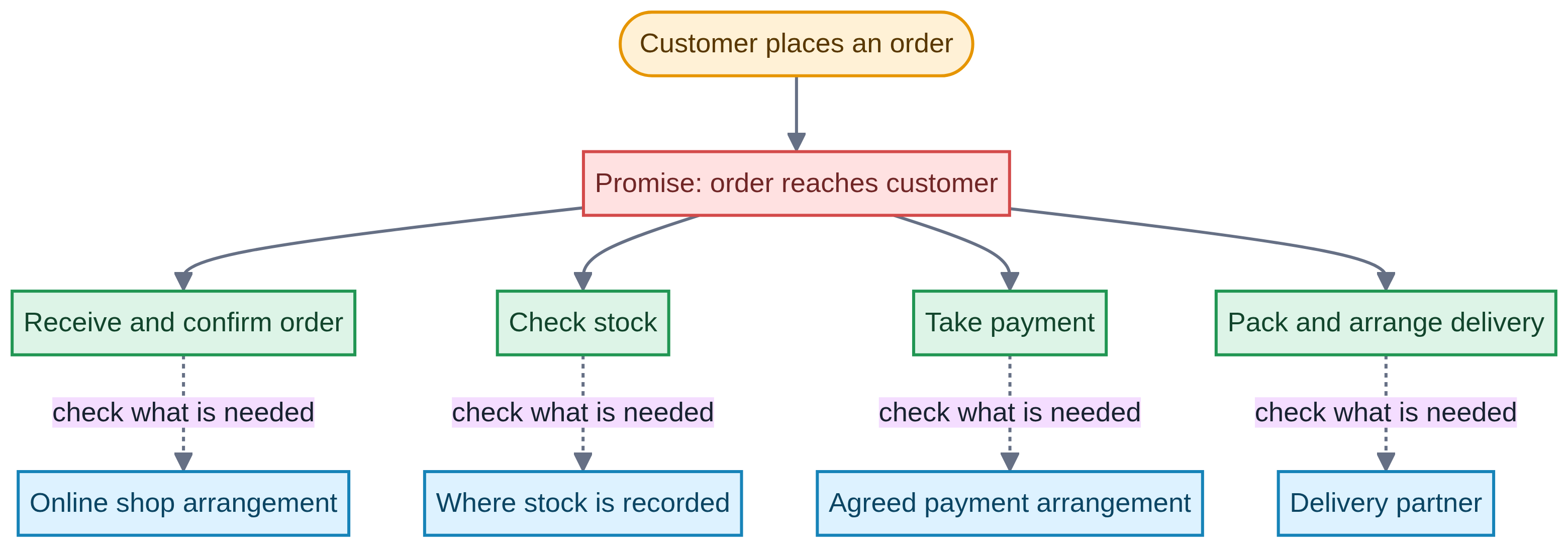
3. An online shop: get the order to the customer
An order may rely on the shop receiving it, stock being checked, payment being taken, the parcel being prepared and delivery being arranged. A simple view helps the owner ask which steps—and which suppliers or arrangements—are essential to completing the sale.
Start with what is known. Mark what is not.
First, choose one important customer promise. List the people, suppliers and everyday arrangements needed to deliver it. Ask the people who know to confirm each connection. Note who checked and who is responsible. If a link is uncertain, mark it “to check” and assign someone to follow up. A familiar name or assumption is not proof.
Once that first picture is dependable, connect the checked parts to the customer promise. Keep it current as the business changes.
Why this matters to owners and investors
- Plan changes: see which customer promises might be affected.
- Direct spending: consider which areas deserve attention based on the impact if they stop working—not simply how many things the business uses.
- Prepare for recovery: agree who to contact, what to restore first, and whether a backup, temporary workaround or alternative supplier is practical.
- Make responsibility visible: clarify who checks each important part and who follows up on gaps.
- Set up simple reminders: once the information is checked, use reminders or updates to support routine follow-up.
For an investor, this can prompt practical questions: does too much of the business rely on one supplier, person or arrangement? What would be affected if it stopped? Would extra spending meaningfully reduce that exposure? This view does not guarantee returns or prevent every disruption; it makes assumptions easier to see and discuss.
A small business can begin with one promise and a single page. A growing business can use the same approach across more services and teams.
What must work for us to keep our customer promise—and what is the next-best option if it doesn’t?
About these examples: The diagrams are illustrative, not verified maps of any real café, bus operator or online shop. Each business should confirm its own arrangements, responsibilities and safe alternatives.